

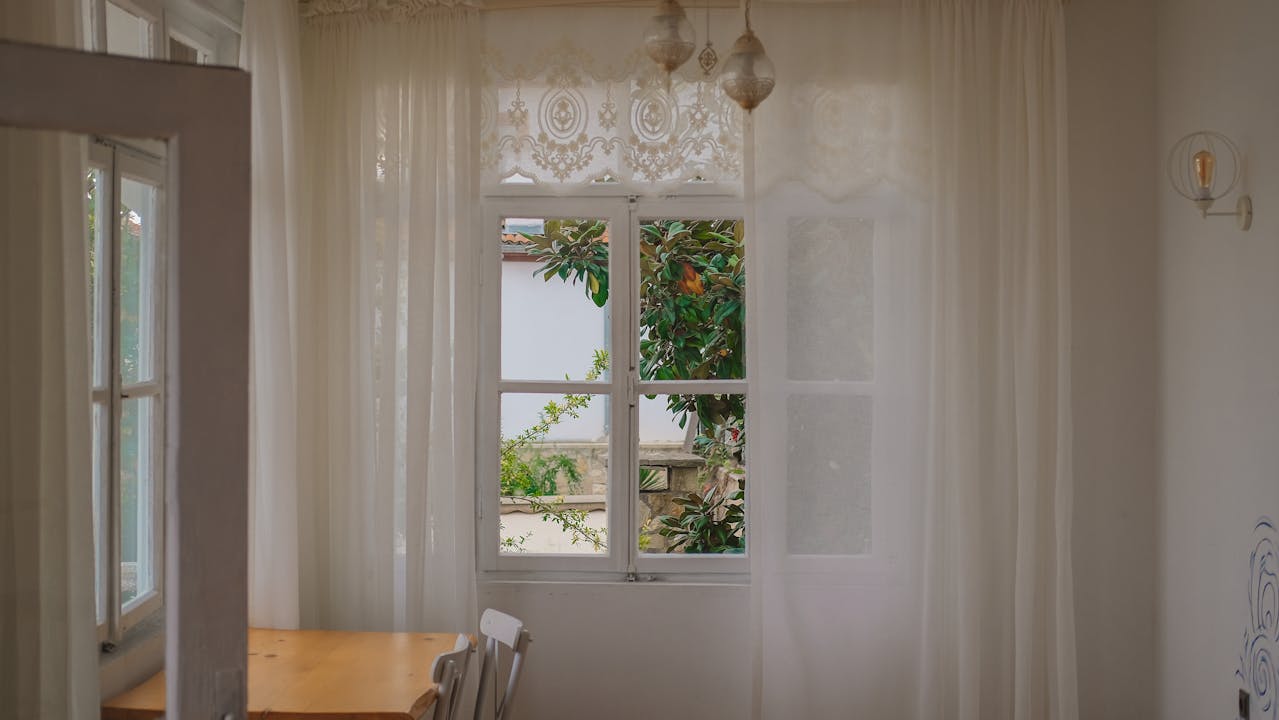
Patterned curtains can transform a room in a way few other elements can. They add movement, depth, and personality, often doing more visual work than furniture or accessories combined. But pattern also comes with risk. Too bold, and the room feels busy. Too timid, and the curtains feel like an afterthought.
Designers approach patterned curtains with intention. Pattern isn’t decoration for decoration’s sake—it’s a tool to balance scale, anchor colour, and give a room its rhythm. These are the principles they rely on to make patterned curtains feel confident rather than chaotic.
Decide What the Pattern Is Meant to Do
Before choosing a pattern, designers ask a simple question: what role should these curtains play? In some rooms, patterned curtains are the focal point, setting the tone for the entire space. In others, they’re supporting players, quietly reinforcing a palette or softening architectural lines.
This decision guides everything that follows—scale, colour, and even fabric choice. When the purpose of the pattern is clear, the room feels cohesive rather than crowded.
Match Pattern Scale to Room Size
One of the most common mistakes with patterned curtains is choosing the wrong scale. When mixing patterns in interior design, remember that large, bold patterns tend to work best in rooms with generous proportions or tall ceilings, where they have space to breathe. Smaller rooms benefit from tighter repeats, finer motifs, or vertically oriented designs that don’t overwhelm the eye.
Designers often use pattern scale to subtly adjust proportions. Vertical motifs draw the eye upward, while horizontal patterns can make narrow windows feel wider when used thoughtfully.
Limit the Number of Competing Patterns
Patterned curtains thrive when they’re allowed to shine. Designers typically limit the number of additional patterns in the room, especially at similar scales. When everything competes for attention, the curtains lose their impact.
Instead, patterned curtains are paired with quieter elements — plain custom roman shades, solid upholstery, subtle textures, or gently layered neutrals. This contrast gives the eye somewhere to rest and allows the pattern to feel intentional rather than noisy.
Echo Colours Already Present in the Room
Designers rarely introduce entirely new colours through patterned curtains. Instead, they pull from hues already present in the space — a wall colour, a rug, a piece of artwork, or even a favourite chair.
This repetition creates harmony, making the pattern feel integrated rather than pasted on. Even bold patterns feel grounded when their colours are familiar to the room.
Use Pattern to Add Warmth and Movement
Pattern brings life to rooms that might otherwise feel flat. In spaces dominated by clean lines or neutral finishes, patterned curtains introduce softness and motion, especially when the fabric moves with light and air.
Designers often use pattern to counterbalance minimal architecture, adding warmth without resorting to excess ornamentation. The result is a room that feels layered and lived-in rather than stark.
Choose Fabric That Supports the Pattern
Not all fabrics carry pattern equally well. Designers pay close attention to how a pattern sits on the fabric itself. Softer weaves create a relaxed, organic feel, while crisper fabrics give patterns more definition and structure.
Heavier fabrics tend to make patterns feel richer and more formal, while lighter materials lend a casual, breezy quality. The fabric should reinforce the mood you want the pattern to convey.
Mind How the Pattern Falls When Hung
A pattern can look very different once it’s made into curtains. Designers think about how motifs align at seams, how repeats fall at eye level, and how pleating affects the pattern’s rhythm.
Well-made curtains ensure the pattern flows smoothly across panels rather than feeling chopped or distorted. This attention to detail is often what separates designer work from off-the-rack solutions.
Balance Bold Patterns with Confident Simplicity
Bold patterns work best when the rest of the room feels confident and uncluttered. Designers often simplify furniture silhouettes, lighting, and accessories when using expressive curtains, letting the pattern do the talking.
This doesn’t mean the room has to be minimal — it simply needs clarity. When each element has a purpose, patterned curtains elevate the space instead of overwhelming it.
Final Thoughts: Pattern with Purpose
Patterned curtains aren’t about being brave for the sake of it. They’re about intention, balance, and understanding how visual rhythm works in a space. When designers get it right, patterned curtains don’t just decorate a room — they define it.
Handled thoughtfully, pattern becomes a design asset rather than a risk, adding character, warmth, and personality that feels both timeless and personal.
